

In December 2025, some Americans will receive three Social Security payments in a single month, an unusual but predictable outcome of how federal benefit schedules align with holidays and the calendar. The Social Security three payments December 2025 situation affects certain recipients of Supplemental Security Income and highlights how payment timing — not benefit increases — can create short-term financial confusion.
Three Payments in December 2025
| Key Fact | Detail |
|---|---|
| Month affected | December 2025 |
| Maximum payments | Up to three |
| Programs involved | SSI and Social Security |
| Reason | Federal holiday scheduling |
| Extra money? | No |
How Social Security Payments Are Normally Issued
The Social Security Administration (SSA) distributes monthly benefits to more than 70 million Americans through a structured and largely automated payment calendar.
For most beneficiaries receiving retirement, survivor, or disability benefits, payments are issued on a Wednesday each month. The specific Wednesday depends on the recipient’s date of birth. Individuals born early in the month are paid on the second Wednesday, while those born later receive payments on the third or fourth Wednesday.
Supplemental Security Income (SSI) follows a different schedule. SSI is a needs-based program designed to support older adults, people with disabilities, and blind individuals who have limited income and assets. SSI payments are normally issued on the first day of each month.
When a scheduled payment date falls on a weekend or federal holiday, the SSA issues the payment on the preceding business day. This long-standing administrative rule is what drives the December 2025 anomaly.
Why December 2025 Is Different
December 2025 contains a rare alignment of payment dates that affects SSI recipients.
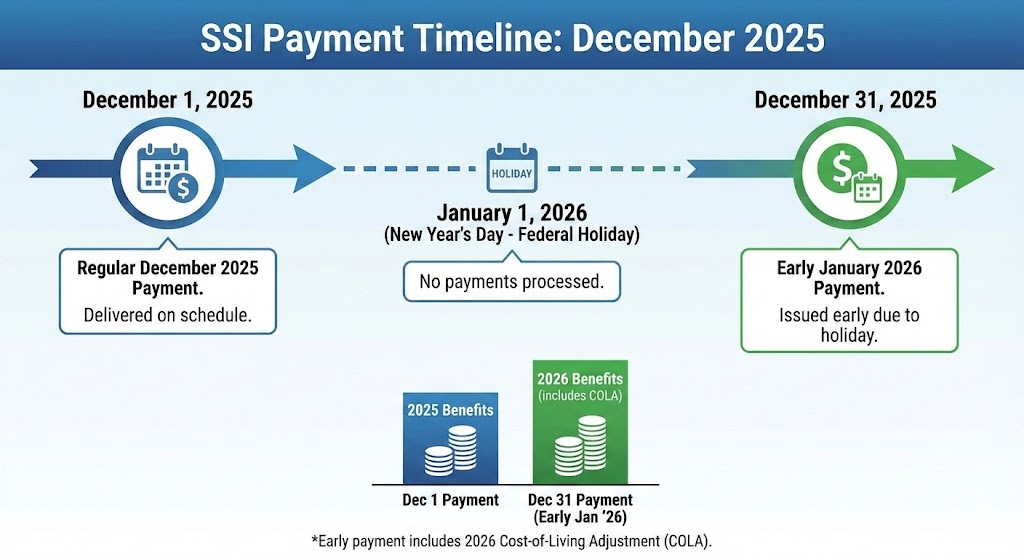
January 1, 2026 — New Year’s Day — falls on a Thursday and is a federal holiday. Because SSI payments are normally issued on the first of the month, the SSA will issue the January 2026 SSI payment early, on Wednesday, December 31, 2025.
As a result, SSI recipients will receive:
- Their regular December SSI payment on December 1, 2025
- Their January SSI payment early on December 31, 2025
For beneficiaries who also receive a regular Social Security retirement, survivor, or disability payment in mid-December, this produces three separate deposits in the same calendar month.
Who Will Receive Three Payments in December 2025 — and Who Will Not
Three Payments in December 2025
The three-payment scenario applies only to individuals who:
- Receive Supplemental Security Income, and
- Also receive retirement, disability (SSDI), or survivor benefits
These beneficiaries will see:
- SSI payment on December 1
- Regular Social Security payment on their assigned Wednesday
- Early January SSI payment on December 31
Two Payments in December 2025
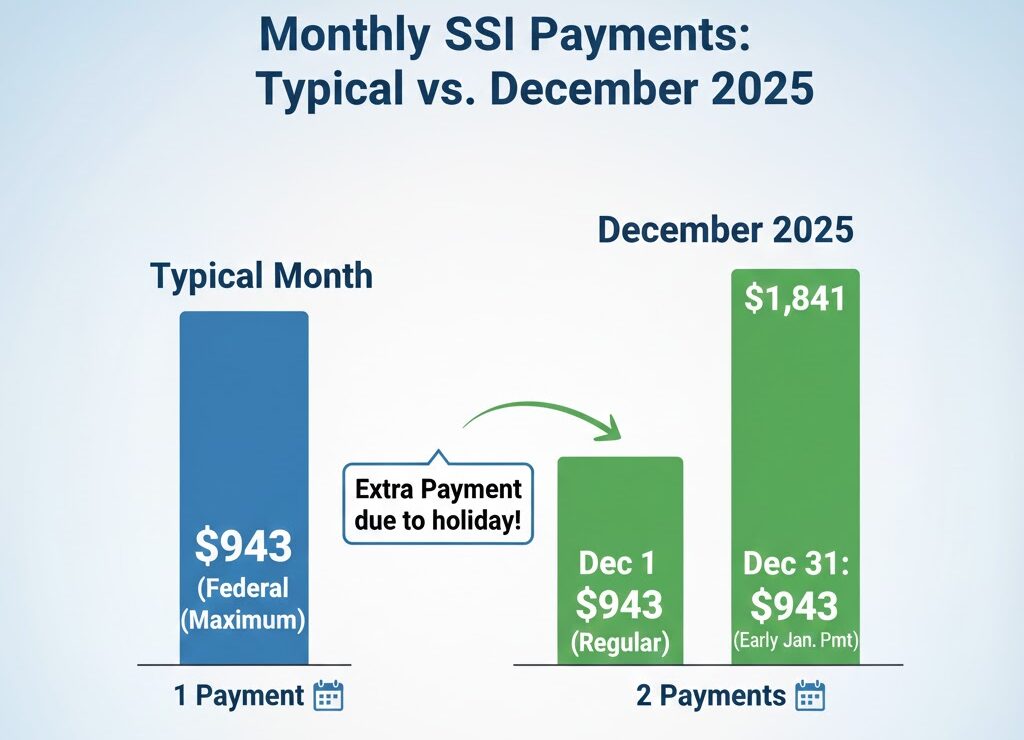
Individuals who receive only SSI — and no other Social Security benefit — will receive two payments:
- December 1 (December SSI)
- December 31 (January SSI paid early)
One Payment in December 2025
Most Social Security beneficiaries — including those receiving only retirement, survivor, or disability benefits — will receive one payment, issued on their standard Wednesday schedule.
No Bonus, No Increase: What the Extra Payment Is — and Is Not
The SSA and policy analysts stress that the additional payment visible in December 2025 is not extra income.
“This is simply a calendar shift,” the Social Security Administration explains in its annual payment guidance. “Early payments ensure beneficiaries are not delayed by weekends or federal holidays.”
The December 31 payment represents January 2026 SSI, meaning recipients will not receive an SSI payment in January.
Financial planners caution that misunderstanding this shift can lead to budgeting problems in the new year.
Financial Planning Implications for Beneficiaries
While the payment timing does not change total annual benefits, it can create the appearance of increased income at year’s end.
“For individuals living on fixed incomes, timing matters just as much as amounts,” said a retirement policy analyst at the Urban Institute. “Receiving two SSI payments in December may feel like a windfall, but January will have no SSI deposit.”
This timing can affect:
- Rent payments
- Utility budgeting
- Automatic bill withdrawals
- Savings eligibility calculations for needs-based programs
Some financial counselors recommend setting aside the December 31 payment to cover January expenses.
Historical Context: How Often Does This Happen?
The Social Security three payments December 2025 situation is uncommon but not unprecedented.
Similar calendar overlaps occurred in:
- December 2015
- December 2020
- December 2022
Each instance involved SSI payments being advanced due to holidays falling on January 1 or a weekend.
“These are predictable outcomes of the calendar, not policy changes,” said a former SSA administrator. “They occur roughly every five to seven years.”
Interaction With Cost-of-Living Adjustments (COLA)
The December 31, 2025 SSI payment will reflect the 2026 cost-of-living adjustment (COLA), which the SSA announces annually in October.
Although the payment arrives in December, it is calculated using the new benefit amount for January 2026. This can further add to confusion, as beneficiaries may notice a higher dollar amount arriving before the new year.
The SSA advises recipients to review official COLA notices to understand benefit changes.
Administrative Perspective: Why SSA Uses This System
The SSA processes tens of millions of payments each month. Issuing benefits early when holidays intervene helps prevent delays, banking backlogs, and missed payments.
“This approach prioritizes reliability,” the agency states in its public guidance. “Beneficiaries should receive payments on time, even when holidays disrupt the calendar.”
Changing this system would require significant administrative restructuring, according to government accountability reports.
Broader Implications for Public Understanding
The December 2025 payment structure highlights a broader issue: many Americans remain unclear about how Social Security programs differ and how payment schedules work.
Experts say improved communication is essential, especially for vulnerable populations who rely heavily on consistent benefit timing.
“Even predictable administrative changes can feel disruptive without clear information,” said a senior fellow at a retirement policy think tank.
2026 Tax Season Preview: What New Credits and Deductions Could Mean for Your Refund
Looking Ahead
The December 2025 payment anomaly will resolve itself by February 2026, when normal SSI and Social Security schedules resume. While unusual, the situation reflects long-standing administrative rules rather than policy shifts or benefit changes.
For recipients, understanding the timing — and planning accordingly — can help avoid financial stress during the transition into the new year.
FAQs About Three Payments in December 2025
Will I receive extra money in December 2025?
No. The additional payment is an early issuance of January 2026 SSI.
Will this affect my taxes?
Generally no, but receiving two payments in one month could affect income reporting for certain needs-based programs. Tax professionals recommend keeping records.
Why is there no SSI payment in January 2026?
Because the January payment is issued on December 31, 2025.
Does this affect Medicare premiums?
Medicare premiums are deducted monthly from Social Security benefits and are not altered by payment timing.
Can I confirm my payment dates?
Yes. Beneficiaries can log into their My Social Security accounts or consult the SSA’s annual payment calendar.