


Millions of Americans receiving January Social Security checks will see their first payments of 2026 arrive earlier than usual, as federal holidays shift the payment calendar. The Social Security Administration (SSA) says the timing affects Supplemental Security Income recipients and some long-time beneficiaries, while most retirees and disabled workers will be paid later in the month under the standard schedule.
January Social Security Checks
| Key Fact | Detail |
|---|---|
| First January 2026 payment | December 31, 2025 (SSI only) |
| Early January Social Security | January 2, 2026 |
| Main payment dates | Jan. 14, 21, and 28, 2026 |
| Official Website | Social Security Administration |
Looking ahead, the SSA says it does not anticipate further scheduling disruptions in early 2026 beyond routine holiday adjustments. Officials continue to encourage beneficiaries to rely on direct deposit for the fastest and most secure access to monthly payments, as the agency faces long-term demographic and funding challenges.
When January Social Security Checks Are First Sent in 2026
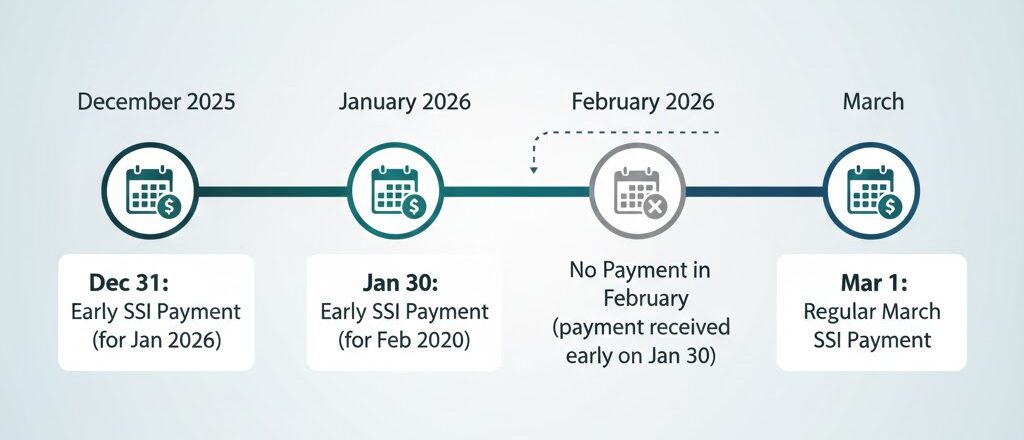
The earliest January Social Security checks will be issued before the new year begins. According to the Social Security Administration, Supplemental Security Income payments scheduled for January 1 will instead be delivered on December 31, 2025, because New Year’s Day is a federal holiday.
The SSA emphasizes that this early deposit does not represent an additional payment. It replaces the January benefit and follows long-standing federal payment rules designed to ensure beneficiaries are not paid on days when banks and government offices are closed.
“Whenever the first of the month falls on a weekend or holiday, SSI payments are sent on the prior business day,” the agency states in its official payment guidance.
For recipients who rely on SSI to cover essential expenses such as rent, utilities, and medication, the early payment can be helpful but also challenging. Financial counselors often warn that the extended gap until the next payment can create budgeting pressure, particularly for households with little savings.
SSI Payments Arrive First Due to Federal Holiday
Supplemental Security Income, or SSI, serves low-income seniors and people with disabilities who meet strict income and asset limits. Unlike Social Security retirement or disability insurance, SSI is funded through general tax revenues rather than payroll taxes.
Because January 1, 2026, is a Thursday and a federal holiday, the payment moves to the last business day of December. This adjustment is routine and occurs several times each year when holidays or weekends affect the calendar.
Advocacy groups regularly remind recipients that these early deposits can be misleading. “It can feel like a bonus, but it’s not,” said a spokesperson for a national senior advocacy organization in prior public guidance. “That money has to last longer.”
Social Security Retirement and Disability Payments Follow Staggered Schedule
Most recipients of Social Security retirement, disability, and survivor benefits will receive January Social Security checks later in the month, based on birth dates. This staggered system applies to the majority of beneficiaries and is separate from the SSI schedule.
According to the SSA’s published calendar:
- January 2, 2026: Beneficiaries who began receiving payments before May 1997 and those who receive both SSI and Social Security
- January 14, 2026: Birthdays on the 1st through the 10th
- January 21, 2026: Birthdays on the 11th through the 20th
- January 28, 2026: Birthdays on the 21st through the 31st
Payments are typically deposited electronically at midnight, though timing can vary by financial institution. Some banks and credit unions make funds available earlier as a customer service, but the SSA cautions that these early releases are not guaranteed.
Why Social Security Uses Different Payment Dates
The staggered payment schedule was introduced in the late 1990s as the number of beneficiaries increased sharply with the aging of the Baby Boomer generation. Prior to that change, most beneficiaries were paid on the third day of each month.
“The system allows the agency to process millions of payments efficiently while minimizing delays,” said Kathleen Romig, a senior policy analyst at the Center on Budget and Policy Priorities, in prior public analysis of SSA operations.
More than 71 million Americans currently receive some form of Social Security benefit, including retirement, disability, survivor, and SSI payments. The size of the program makes payment timing and reliability a critical operational concern.
Cost-of-Living Adjustment Reflected in January Social Security Checks
January payments will also reflect the 2026 cost-of-living adjustment (COLA), which the SSA announced earlier based on inflation data from the Bureau of Labor Statistics.
The COLA is designed to help benefits keep pace with rising prices for goods and services, including food, housing, and healthcare. It is calculated using the Consumer Price Index for Urban Wage Earners and Clerical Workers (CPI-W).
While the adjustment applies automatically, the real-world impact varies. Retirees with higher benefit amounts will see larger dollar increases, while lower-income recipients may still struggle with rising costs, particularly for rent and medical care.
Regional and Demographic Impact
Social Security payments play a disproportionate role in certain regions of the country. Rural areas, the South, and parts of the Midwest tend to have higher shares of residents who rely on Social Security as their primary source of income.
According to SSA data, about 40 percent of older Americans depend on Social Security for at least half of their income. For roughly 1 in 7 seniors, it accounts for 90 percent or more.
These figures help explain why even small shifts in payment timing can have significant local economic effects, particularly in communities with limited employment opportunities or high healthcare costs.
What Beneficiaries Should Watch For
The SSA advises recipients to allow up to three business days for electronic deposits to appear, particularly around holidays. Paper checks, which are now rare, may take longer and are more vulnerable to postal delays.
Beneficiaries are encouraged to use the SSA’s online portal to verify payment dates and amounts. The agency also warns recipients to be cautious of scams, which often increase around the start of the year and during COLA announcements.
Common scams include phone calls or messages claiming a payment problem that requires immediate action. The SSA states it does not threaten beneficiaries or demand personal information by phone or email.
TSA iPhone Travel Requirement – Why Updating to iOS 26.2 Is Being Recommended Before Flying
Planning and Budgeting Considerations
Financial planners often recommend that recipients treat early SSI payments as if they arrived in January, spreading expenses accordingly. Some suggest setting aside part of the December deposit to avoid shortages later in the month.
For retirees on fixed incomes, January is also a time when Medicare premiums, tax withholding changes, or insurance adjustments can affect net benefit amounts. Reviewing statements carefully can help avoid surprises.
FAQs About January Social Security Checks
Is the December 31 payment an extra check?
No. It is the January SSI payment issued early because of the holiday.
Will everyone receive Social Security on January 2?
No. Only beneficiaries who started receiving benefits before May 1997 or who receive both SSI and Social Security.
Does the COLA apply to all January payments?
Yes. All eligible Social Security and SSI payments reflect the new COLA beginning in January.
Can payment dates change unexpectedly?
Outside of holidays or rare emergencies, the SSA publishes payment dates well in advance and rarely changes them.