
New Mexico lawmakers are weighing a request for millions of dollars to reduce New Mexico SNAP errors, a move state officials say is essential to protect food assistance for low-income residents, but which critics warn could expose the state to financial penalties and unintended consequences under evolving federal oversight rules.
New Mexico Looks to Reduce SNAP Errors
| Key Fact | Detail |
|---|---|
| SNAP reach | About 1 in 5 New Mexicans receive SNAP benefits |
| Error rate | New Mexico’s payment error rate ranks among the highest nationally |
| Funding request | Roughly $3 million sought for staffing and system upgrades |
| Federal oversight | States with persistent errors may face cost-sharing penalties |
What Are New Mexico SNAP Errors?
The Supplemental Nutrition Assistance Program (SNAP) is the largest federal nutrition assistance program in the United States, providing monthly food benefits to more than 40 million people nationwide. While SNAP is federally funded, it is administered by states, which are responsible for determining eligibility, calculating benefit levels, and issuing payments.
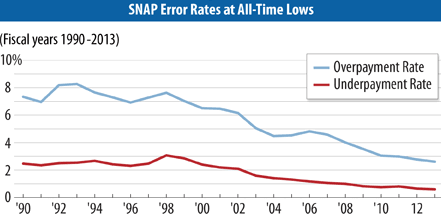
New Mexico SNAP errors refer to payment inaccuracies identified through federal quality control reviews. These errors occur when households receive more or less assistance than they are legally entitled to, typically because of administrative mistakes. Importantly, federal reviews consistently show that the majority of SNAP errors are not the result of fraud but of procedural or staffing challenges.
Common causes include miscalculated household income, delayed processing of reported changes, or documentation that arrives after benefit determinations are made. In rural states like New Mexico, where caseworkers often serve large geographic areas and multilingual populations, these challenges are amplified.
According to the U.S. Department of Agriculture (USDA), New Mexico’s SNAP payment error rate has exceeded the national average for several years. The state’s rate has placed it among the highest-ranked states for administrative errors, drawing scrutiny from federal regulators and lawmakers alike.
“SNAP is a rules-heavy program,” said David Scrase, secretary of the New Mexico Human Services Department, during testimony before a legislative finance committee. “When staff are stretched thin, the likelihood of technical mistakes increases, even when eligibility itself is correct.”
The Funding Request and Its Purpose
The administration of Governor Michelle Lujan Grisham has asked the Legislature to approve approximately $3 million in new funding aimed at improving SNAP administration. The request includes funding for additional eligibility workers, expanded training programs, and long-delayed upgrades to the state’s benefits eligibility computer systems.
Officials say the investment is not optional. SNAP benefits distributed in New Mexico total roughly $1 billion annually, making even modest error-rate reductions financially significant. A one-percentage-point change in the error rate can translate into millions of dollars in avoided federal penalties or repayment obligations.
The Human Services Department argues that the funding would allow the state to reduce backlogs, improve caseworker-to-client ratios, and process reported changes more quickly. Many of New Mexico’s eligibility systems date back more than a decade, and some were temporarily patched during the COVID-19 pandemic rather than fully modernized.
Supporters of the funding say failure to act now would cost more later. “This is about risk mitigation,” said Rep. Patricia Lundstrom, a Democrat who chairs the House Appropriations and Finance Committee. “If we do nothing, we are far more likely to face federal sanctions that would cost taxpayers much more than this request.”
Why Federal Rules Are Fueling Debate
While reducing administrative errors is widely seen as a goal shared across party lines, the federal policy framework governing SNAP has complicated the debate.
Under USDA rules, states with persistently high payment error rates can be required to repay a portion of SNAP benefits using state funds. In recent years, federal policymakers have signaled an intent to tighten oversight after pandemic-era flexibilities expired.
However, New Mexico officials warn that the structure of federal benchmarks creates a paradox. Depending on timing and thresholds, a state that rapidly improves its error rate could still face penalties if it remains above certain federal cutoffs during transition periods.
That argument has met skepticism from Republican lawmakers, who say the state should focus on accuracy regardless of federal formulas.
“Taxpayers expect basic competence in administering a billion-dollar program,” said Rep. Paul Pacheco, a Republican member of the House Appropriations Committee. “The idea that we should slow improvement because of penalties raises serious accountability concerns.”
Democrats counter that aggressive enforcement without sufficient staffing risks harming eligible families. They argue that rushed corrections could increase underpayments, delayed approvals, or improper terminations.
The debate mirrors a broader national conversation over how to balance program integrity with access to benefits, particularly as federal policymakers revisit social safety net programs.
Impact on SNAP Recipients
Beyond budgets and compliance metrics, advocates emphasize that New Mexico SNAP errors directly affect households already facing food insecurity.
An underpayment can mean a family runs out of food before the end of the month. An overpayment can result in future benefit reductions or repayment demands, which can be devastating for households with little financial cushion.
New Mexico has one of the highest poverty rates in the nation, and SNAP participation is especially high among children, seniors, and residents of rural and tribal communities. According to state data, nearly half of SNAP households include a child, and a significant share include an elderly or disabled member.
“Administrative mistakes hurt families who rely on SNAP to survive,” said Olivia Romo, a policy analyst with New Mexico Voices for Children. “Accuracy is not just a compliance issue. It determines whether people eat.”
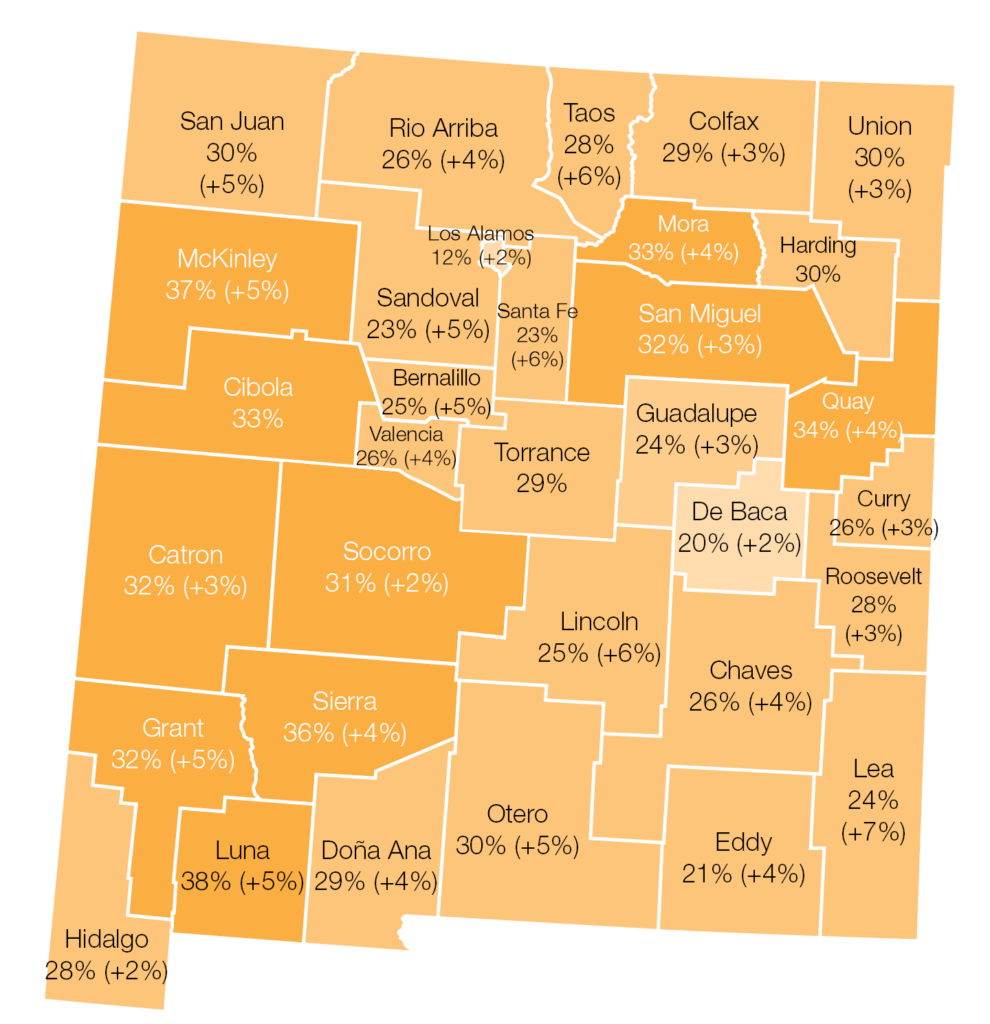
Advocates also note that language barriers and limited internet access in some regions make accurate administration more difficult. Many SNAP participants rely on in-person or phone assistance, increasing pressure on already overburdened staff.
Broader National Context
New Mexico’s challenges reflect national trends. Several states reported elevated SNAP error rates following the COVID-19 pandemic, when emergency rules expanded eligibility, increased benefit amounts, and paused some verification requirements.
As those flexibilities ended, states faced a surge in administrative work, including eligibility redeterminations for millions of households. According to USDA data, staffing shortages and outdated technology were common factors in states with higher error rates.
Nationally, SNAP has become a focal point in political debates over government spending and program oversight. Congressional Republicans have emphasized waste reduction and program integrity, while Democrats argue that excessive restrictions risk increasing hunger.
Policy experts say New Mexico’s situation illustrates the tension between federal uniformity and state capacity. “States are held to national standards, but they operate with vastly different resources and caseloads,” said Dr. Elaine Waxman, a senior fellow at the Urban Institute. “That mismatch is at the heart of these disputes.”
NY Stimulus Check Update: What Officials Confirmed About the December Payment
What Happens Next
The Legislature is expected to decide on the funding request as part of the current budget cycle. If approved, the Human Services Department plans to phase in hiring and system upgrades over the next fiscal year, with measurable benchmarks for improvement.
Federal oversight will continue throughout that period. USDA conducts annual quality control reviews, meaning changes made now will not immediately be reflected in official error-rate statistics.
State officials say patience will be required. “There is no overnight fix,” Scrase told lawmakers. “But failing to invest now guarantees continued problems.”
The final outcome will shape not only New Mexico’s SNAP administration, but also how states nationwide navigate tightening federal scrutiny of social safety net programs.
FAQs About New Mexico Looks to Reduce SNAP Errors
What causes SNAP payment errors?
Most errors result from administrative issues such as misreported income, delayed paperwork, or heavy caseloads, rather than fraud by recipients.
Does a high error rate mean widespread abuse?
No. Federal audits consistently show that most SNAP errors are technical mistakes, not intentional misuse of benefits.
Could New Mexico lose federal SNAP funding?
In extreme cases, federal rules allow for financial penalties or cost-sharing requirements, which could shift some SNAP costs to the state.
How long will it take to see improvements?
Because error rates are measured annually, meaningful improvements may take one to two years to appear in federal reports.