

Beginning December 1, 2025, significant changes to CalFresh, California’s version of the federal Supplemental Nutrition Assistance Program (SNAP), are coming into force. These changes stem from updated federal rules governing work requirements for a specific group of recipients known as able-bodied adults without dependents, or ABAWDs.

The policy shift expands who must meet work or training conditions to remain eligible for food benefits, raising concerns among advocates while drawing support from lawmakers who argue the rules encourage workforce participation. For recipients, the changes introduce new compliance obligations that could determine whether benefits continue or end.
What Is CalFresh and Why It Matters
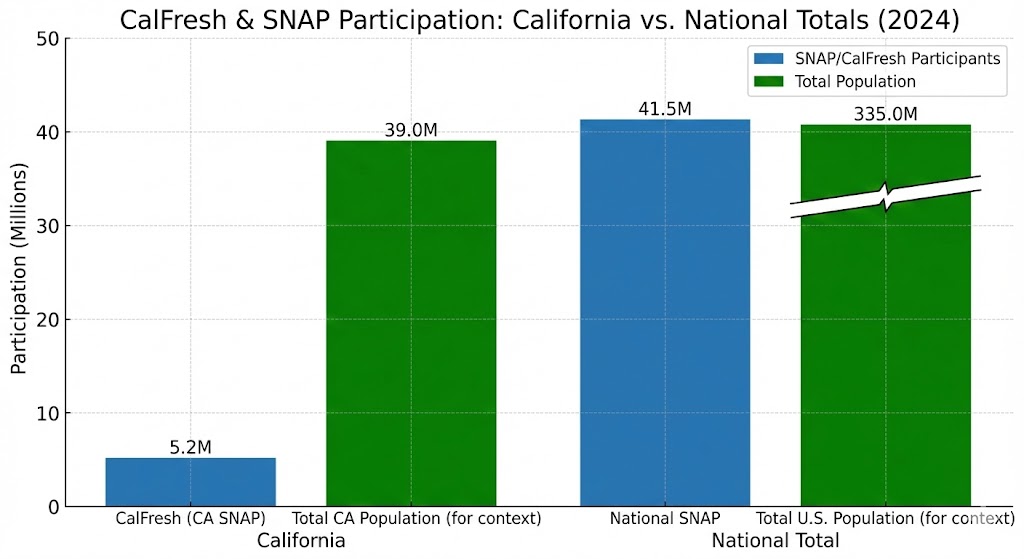
CalFresh is California’s implementation of SNAP, the largest anti-hunger program in the United States. Administered by the California Department of Social Services (CDSS) and funded primarily by the federal government, CalFresh provides monthly food assistance to low-income households through Electronic Benefit Transfer (EBT) cards.
According to federal data, SNAP serves more than 40 million people nationwide each month. In California alone, CalFresh supports millions of residents, including working families, seniors, people with disabilities, veterans, and individuals experiencing homelessness.
Economists widely regard SNAP as one of the most effective tools for reducing food insecurity. Studies from the U.S. Department of Agriculture and independent research institutions show that SNAP participation improves nutrition outcomes, stabilizes household budgets, and acts as an economic stabilizer during downturns by increasing consumer spending at local grocery stores.
Understanding the ABAWD Rule
The ABAWD rule applies to adults who meet all of the following conditions:
- Are between the ages of 18 and 64
- Do not have dependent children under age 14
- Are not considered disabled under federal SNAP definitions
- Are not otherwise exempt under federal or state rules
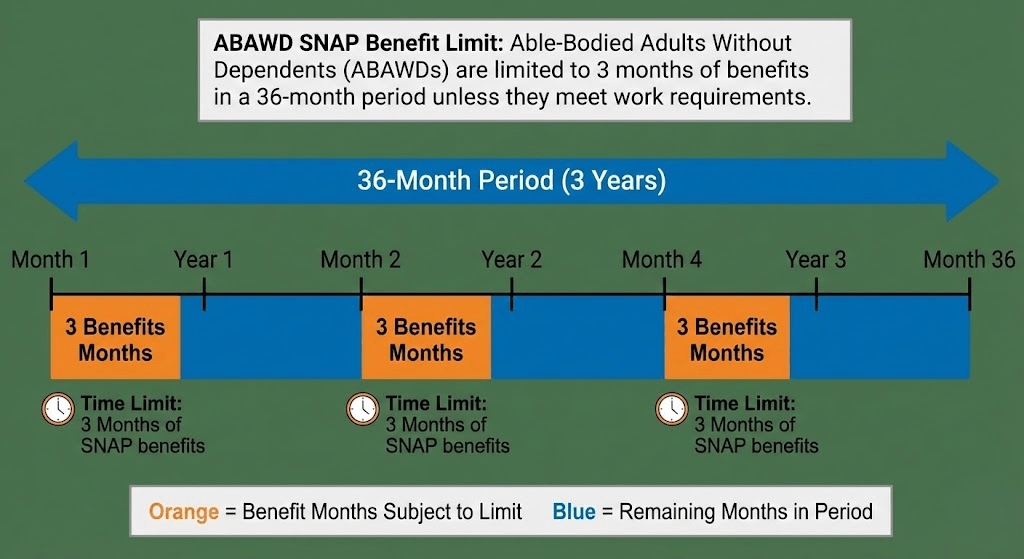
Under long-standing federal law, ABAWDs are limited to receiving SNAP benefits for only three months within any 36-month period unless they meet specific work or training requirements.
To remain eligible beyond that time limit, ABAWDs must complete at least 80 hours per month of qualifying activities. These activities may include paid employment, volunteer work, job training programs, or approved education activities.
What Changed in December 2025 For CalFresh
The December 2025 update significantly expands the scope of the ABAWD rule. The most consequential changes include:
- Expanded age range: The upper age limit for ABAWD requirements increases to 64, bringing older adults into the work requirement framework for the first time.
- Reduced exemptions: Several groups that previously qualified for automatic exemptions are now required to meet work conditions.
- Stricter enforcement: States are required to implement the rules more uniformly, with fewer discretionary exemptions.
These changes were enacted through federal legislation earlier in 2025 and implemented by the U.S. Department of Agriculture’s Food and Nutrition Service.
Who Is Newly Affected by the CalFresh December Changes
The expanded rules mean that several groups who previously retained benefits without work requirements may now face new obligations.
These include:
- Adults aged 55 to 64 who are not disabled and have no dependents
- Parents whose youngest child is age 14 or older
- Veterans who were previously exempt based on status alone
- Individuals experiencing homelessness who do not meet another exemption
Policy analysts note that many individuals in these categories already work intermittently but may struggle to meet documentation or reporting requirements.
How the Time Limit Works in Practice
Under federal SNAP rules, ABAWDs who do not meet work requirements are limited to three months of benefits in a rolling three-year period. Once those months are used, benefits stop unless the individual becomes compliant or qualifies for an exemption.
Importantly, the three months do not have to be consecutive. Any month in which a recipient receives SNAP benefits while not meeting work requirements counts toward the limit.
Recipients who later meet work requirements may requalify, but benefits do not restart automatically. Individuals must report compliance, provide verification, and often reapply.
What Counts as Work or Training
Qualifying activities under the ABAWD rule include:
- Paid employment, including part-time or gig work
- Unpaid volunteer work with approved organizations
- Participation in state-approved job training or workforce development programs
- Certain educational programs tied directly to employment
However, informal work, caregiving for non-dependents, and unapproved training activities generally do not count.
Advocates argue that access to qualifying programs varies widely by region, making compliance more difficult in rural areas or counties with limited workforce infrastructure.
County Waivers and Regional Differences
Federal law allows states to request waivers of the ABAWD time limit in areas with high unemployment or insufficient job opportunities. These waivers temporarily suspend the three-month limit.
In California, several counties have received waivers effective November 2025, including Colusa, Imperial, and Tulare counties. Residents in these counties may continue receiving CalFresh benefits without meeting ABAWD work requirements during the waiver period.
However, waivers are temporary and subject to federal approval. Once a waiver expires, standard ABAWD rules apply unless renewed.
Administrative Challenges for Recipients
Even when recipients are working, compliance can be challenging. Reporting errors, missed paperwork deadlines, or misunderstandings about qualifying activities can lead to benefit termination.
Research from prior ABAWD enforcement periods shows that many individuals lose benefits despite being eligible, often due to administrative barriers rather than lack of work.
County social services offices have acknowledged that increased caseload complexity may strain administrative capacity, particularly during the early months of implementation.
Economic and Social Implications
Supporters of expanded work requirements argue that the rules promote self-sufficiency and align SNAP with other work-based assistance programs. They contend that employment participation increases long-term economic stability.
Critics counter that the policy fails to account for labor market realities, especially for older workers, people with health limitations that do not meet disability standards, and individuals facing unstable housing.
Academic studies examining prior ABAWD expansions found little evidence that work requirements increased long-term employment, while documenting increased food insecurity among affected populations.
Perspectives from Policy Experts
Public policy experts emphasize that the impact of ABAWD rules depends heavily on implementation.
Some note that when states invest in job training and supportive services, compliance rates improve. When such investments are absent, benefit losses increase without corresponding employment gains.
Anti-hunger organizations argue that SNAP’s primary purpose is nutrition support, not workforce regulation, and caution against policies that reduce access to food assistance without addressing underlying employment barriers.
What Recipients Can Do Now After CalFresh December Changes
Recipients who may fall under the expanded ABAWD rules are encouraged to:
- Review eligibility notices carefully
- Track and document work or training hours
- Ask county offices about approved programs
- Seek exemptions if health, caregiving, or other qualifying conditions apply
Legal aid organizations and community groups often provide free assistance to help individuals understand their rights and responsibilities under the new rules.
Alaska’s December Payment: Final $1,000 PFD Checks Arrive on the 18th—Who’s Included
Broader Context: SNAP Policy Trends
The December 2025 changes reflect a broader national debate over the role of work requirements in public assistance programs. Similar debates surround Medicaid, housing assistance, and other safety-net programs.
SNAP has historically balanced nutritional support with limited work expectations. The expansion of ABAWD rules marks one of the most significant adjustments to that balance in recent years.
Future changes may depend on economic conditions, political leadership, and emerging research on program outcomes.
What Happens Next
State agencies will continue rolling out guidance, outreach materials, and compliance systems in the months ahead. Advocacy groups are monitoring implementation closely and may pursue legal or legislative remedies if widespread benefit losses occur.
For now, the December changes represent a turning point for CalFresh recipients subject to the ABAWD rule, with long-term implications for food security across California.